The Grim and Long History of The Panic Defense Particularly W/Shia LaBeouf Arrest
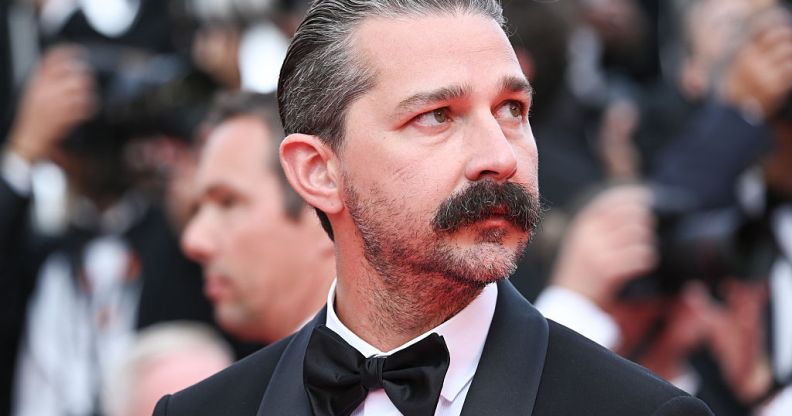 |
| LaBeouf was booked on 17 February on two counts of simple battery after he allegedly shouted homophobic slurs and punched multiple people at the R Bar in New Orleans’s Marigny neighborhood (Getty) |
- Written by Emily Maskell
After recent claims from actor Shia LaBeouf, the phrase ‘gay and trans panic defence’ has been brought into the spotlight. But what does the term mean, and how has it been historically used?
In an interview last month, LaBeouf attempted to defend his alleged use of homophobic slurs following his recent arrest for battery. In doing so, the 39-year-old claimed that “big gay people are scary” to him.
“When I’m standing by myself and three gay dudes are next to me, touching my leg, I get scared. I’m sorry. If that’s homophobic then I’m that,” he said.
The actor continued to suggest that he didn’t want to be too close to a gay person. “I’m good with gay — be gay over there, though,” he said. “Don’t be gay in my lap.”
Following his statement, many have called out the actor for seemingly aligning himself with the gay panic defence.
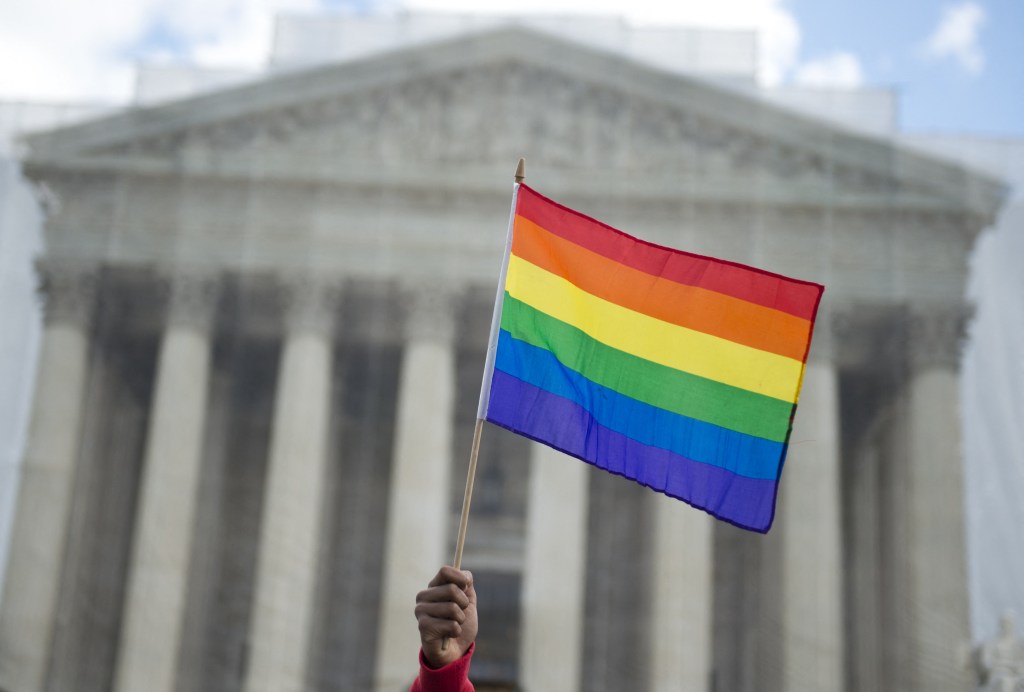
A same-sex marriage supporter waves a rainbow flag in front of the US Supreme Court
What does the gay and trans panic defence mean? (Saul Loeb/Getty)
What is the gay and trans panic defence?
 |
| The gay and trans panic defence, also known as LGBTQ+ panic defence, is a legal strategy. |
The defence is an attempt for those accused of a crime against a queer person (or person perceived as LGBTQ+) to reduce or evade criminal liability. This occurs when the defendant claims they reacted because of an unwanted sexual advance.
Rooted in discrimination, the defence is used to bolster other defences, such as insanity, provocation, or self-defence. In doing so, the defendant is claiming their violence should be excused because of the other individuals’ sexual identity or gender expression.
The gay and trans panic defence uses homophobia, transphobia and victim-blaming. It’s an attempt to reinforce the idea that LGBTQ+ people are somehow dangerous in society.
A rainbow flag stands on a court table
What are the origins of the gay and trans panic defence? (Steffi Loos/Getty Images)
Where does the gay and trans panic defence originate?
The gay and trans panic defence first emerged under the label ‘homosexual panic’.
Trossard is a 'moaner', but I love that - Arteta
Psychiatrist Edward J. Kempf coined the term to describe the panic due to “uncontrollable perverse sexual cravings.” However, the American Psychiatric Association has not considered this a diagnosable condition.
Furthermore, ‘homosexual panic’ is different from LGBTQ+ panic defence. The former was said to be caused by the individual’s own “aroused homosexual cravings.” But the gay panic defence is attributed to unwanted advances.
Reportedly, the first legally applied use of the gay panic defence was in 1967. The People v. Rodriguez case in California saw defendant Rodriguez be found guilty of murder in the second degree.
However, his defence made a plea of not guilty by reason of insanity. It was cited that Rodriguez acted violently as he believed the victim was trying to engage in a homosexual act.
Protesters supporting transgender athletes competing in women's sports wave a transgender pride flag outside the Supreme Court
 |
How has the defence been historically used?
(Heather Diehl/Getty)
What is the history of gay and trans panic defence?
The use of the gay and trans panic defence has spanned decades. Though one of the earliest, widely publicised uses was in 1995 when Scott Amedure, a gay man, revealed he had a crush on his friend Jonathan Schmitz during a taping of The Jenny Jones Show.
A few days later, Schmitz shot and killed Amedure. Schmitz’s attorneys applied the gay panic defence, arguing his violent act was because of Amedure’s admission of attraction. Therefore, eh did not have the intent for first-degree murder. The jury, seemingly accepting the argument, convicted Schmitz of second-degree murder.
Additionally, the trans panic defence has also made its way into public discourse. The 2008 murder of Angie Zapata was a highly publicised case.
Zapata, an 18-year-old transgender woman, was murdered by Allen Ray Andrade after he discovered she was trans. Andrade was convicted of first-degree murder and a hate crime. This verdict made Andrade the first to be convicted under a state hate crime statute for the murder of a transgender person in the US.
Cropped Hand Of Men Removing Handcuffs
Is the gay and trans panic defence still in use? (Getty)
Is the defence still used?
In the UK, the Crown Prosecution Service advises against the use of the LGBTQ+ panic defence.
However, in 2024, the service updated guidance regarding “deceiving someone or failing to disclose birth sex.”
The service outlines: “In line with the law on consent – charges will depend on whether a victim was aware of the person’s birth sex and therefore consented to sexual activity by choice. The suspect must also have reasonably believed consent had been given.”
In the US, the law is dependent on the state. While gay and trans panic defence is banned in several states, the Williams Institute at UCLA School of Law found the defences remain available in most states.
The report details: “gay and trans panic defences were used at least 104 times across 35 states, the District of Columbia, and Puerto Rico between 1970 and 2020. Charges were reduced for defendants who used the gay and trans panic defences about one-third of the time.”
Furthermore, in Louisiana, where LaBeouf’s alleged assault took place, the gay and trans panic defence is still allowed.


Comments