This Soccer Star Admires Gay Players That Come Out
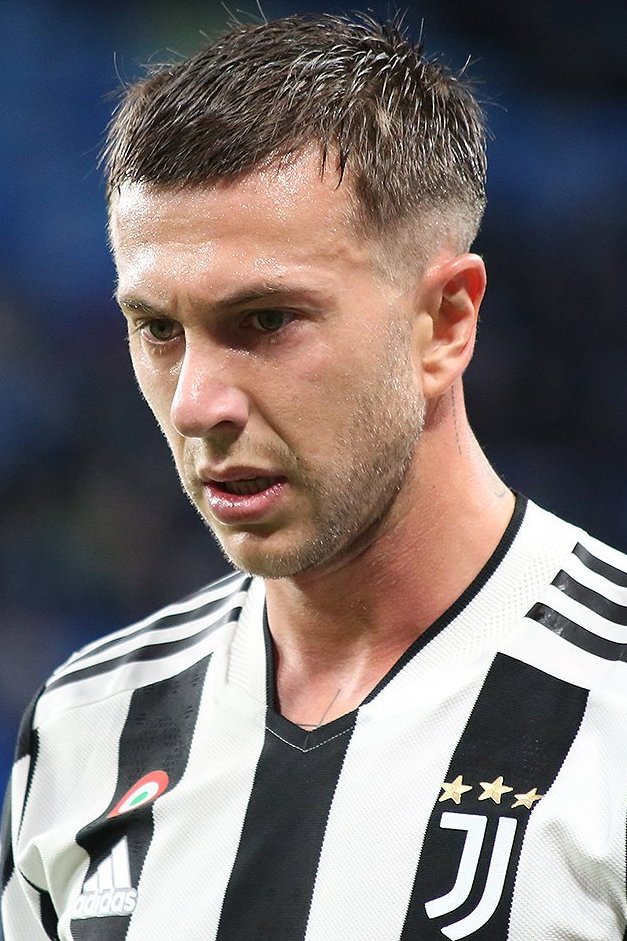 |
| Wikipedia |
 |
| Can you tell the name of this player who came out a few years ago |
Over the years, he’s been subjected to homophobic taunts, often triggered by his fashion choices, confident personality or impressive physique.
Now he’s spoken candidly about how “painful” it once felt to be targeted, and the respect he has for gay players who come out. In a frank interview with The BSMT, one of Italy’s most popular podcasts, Bernardeschi says “chapeau!” to the relatively few players in the history of the men’s game who have gone public about being gay or bi.
Now 31, Bernardeschi was once likened to the legendary Roberto Baggio, who famously carried the Azzurri all the way to the FIFA World Cup final at USA ‘94.
Like Baggio, Bernardeschi is an attacking midfielder who made his name at Fiorentina before moving to Juventus.
Although he’s not idolized to the same degree as the man nicknamed “The Divine Ponytail,” he can at least point to having lifted a major trophy with his country — the UEFA European Championship four years ago.
Bernardeschi scored what proved to be the tournament-winning spot-kick as Italy triumphed over Wembley hosts England in a penalty shootout in the final. It was the first time in more than 50 years that the Azzurri had been crowned continental champions.
A year after that success, he left Juve to move to Toronto FC with his wife Veronica and their two daughters, Deva and Lena. He was a big draw and a fan favorite in MLS, but the team underperformed, and his four-year contract was cancelled early. He returned to his homeland to play for Bologna.
Chatting to BSMT host Gianluca Gazzoli, Bernardeschi was asked how he learned to cope during his career with the rumors surrounding his sexuality, and the resulting homophobia.
“Now I take it easy, I learn to laugh at myself,” he said.
“Once you realize that your public image is different from who you really are, that’s key.
“I’m convinced that as public figures, we have a great responsibility to communicate positive messages. We need to speak up more often, especially about injustice in the world.”
He recalled being a young player at Fiorentina, and wearing pantaloons. Newspapers published articles about it.
“Twelve years ago, I wore pants that looked like a skirt. Imagine the uproar that followed. But what’s the problem? If I like it, I’ll wear it.”
Homophobia directed at players who challenge gender norms remain a hallmark of soccer’s macho culture. There has never been a publicly out gay or bi Italian player in the men’s professional game.
There’s a sense of exasperation when Bernardeschi talks about his experience and the general situation.
“How many times have people called me gay? And if I liked it, do you think I wouldn’t tell you? What’s the problem? On the contrary, I would be proud of it.
“And to those… who say it, chapeau! In this world, everyone should be free to do what they want.”
He also showed his support for LGBTQ people during the Qatar World Cup in 2022. During an appearance as a pundit on national broadcaster Rai 1, he painted Pride rainbow stripes on the back of his hand.
 |
He is mindful of the damage homophobia can cause, such as for young people in sports.
Looking back on what happened at Fiorentina, he added: “I was 20 at the time, and it was very painful. I talk about it with a laugh now, but it wasn’t funny then.”
These days, he’s a strong advocate for therapy, particularly for anyone struggling with their mental wellbeing.
“I started working on myself not only last year, but three years before that. And I’m still doing it.
“If you understand where the problem comes from, you can fix it. Failure is a part of life, and you have to try to understand it, dig deeper, put yourself first, without blaming this or that.”
Subscribe to the Outsports newsletter


Comments