Trump threatened to Leave NATO, Is this Time It?

Trump's threatened to leave Nato before - but this time he's angrier at alliance members
Lyse Doucet
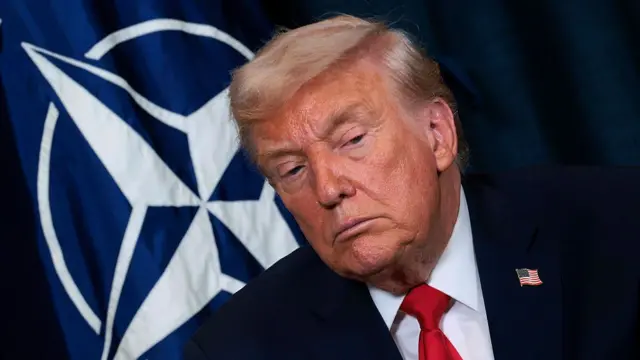
Chief international correspondentGETTY IMAGESOf all the warnings in President Trump’s arsenal, leaving the Nato military alliance is among those he’s wielded the most. He almost did it in his first term.
Nato's former chief Jens Stoltenberg said "we saw clear signs that Trump was preparing to act on his threat", in his recent memoir On My Watch.
Stoltenberg recounted how he went on Fox News and credited Trump with pressuring Nato allies to increase their military spending.
Trump didn’t make the speech the White House had reportedly drafted for a US withdrawal.
This time, in his second term, Trump is even angrier as Nato members hold back from joining a war they weren’t consulted on, and still don’t understand its goals.
But some, including the UK, know they need to engage on some fronts, including the defence of Arab allies, as well as to help open the vital Strait of Hormuz.
This new crisis will again strengthen the resolve of European countries and Canada to bolster their own defences.
But there’s still that cold hard fact that the might of the US military matters - immensely. Nato's current chief Mark Rutte is also called the "Trump whisperer and has to do his utmost to keep the US president on side.
As oil falls back to below $100 a barrel, here's how prices have fluctuated since war began
Markets have been volatile throughout the war, with the price of oil in particular sliding up and down due to the effective closure of the Strait of Hormuz - one of the world's busiest oil shipping channels.
Earlier, comments that seemed to hint at an end to the conflict - from US President Donald Trump and Iranian President Masoud Pezeshkian - resulted in oil prices falling back to below $100 a barrel (£75).
The below graphic shows Brent crude's fluctuating price from since before the war started until now.
Trump's adept at changing rhetoric, so what does 'very soon' actually mean?
Paul Adams
Diplomatic correspondentAs always, with Donald Trump, it's important to remember that deadlines are constantly changing and that timelines are not always what they seem.
As the president himself said last week, "in Trump time, a day is an eternity."
As this war began, Trump suggested it might last "four to five weeks". White House officials have repeatedly used this formulation, with the Defence Secretary and others regularly saying Operation Epic Fury is ahead of schedule.
We’re halfway through week five now, so the president's suggestion last night that the war will end "very soon" but might take another two to three weeks already feels like an admission that this is taking longer than anticipated.
But deliberately or otherwise, the president paints a constantly shifting picture, talking one minute of negotiations proceeding rapidly and the next of threats to obliterate Iran’s energy infrastructure.
As Pete Hegseth said on Tuesday, "the point is to be unpredictable".
The president is adept at changing his rhetoric to suit altered circumstances. When he gives his "important update" later tonight, it will be interesting to see if he’s any clearer on the definition of "very soon" and what he expects to have achieved by then.




Comments