e "Mad Men" star is said planning to wed his longtime partner Tom Cianfichi this coming Christmas in Vermont, New England.
© Sophia Quach/PR Photos
Following the footsteps of some other Hollywood gay celebs, actor Bryan Batt is planning to marry his longtime same-sex partner, events planner Tom Cianfichi. A source is quoted as telling National Enquirer, the pair who has been together for more than eighteen years is planning a Christmas wedding.
"They're leaning toward a Christmas wedding in Vermont," reveals the source. "Bryan is at the top of his game professionally, and they've never been happier."
Wedding arrangements reportedly have been worked on by Bryan and Tom. They "already consider themselves married, and are registered as domestic partners in New Orleans," claims an insider. "Tom's working on the wedding arrangements, and with their combined style and taste; it's certain to be a big event. They intend to pull out all the stops."
Nevertheless, possible wedding venue and invited guests are not mentioned. Bryan himself is yet to comment on the wedding report.
On screen, Bryan Batt is best known for his role as Salvatore Romano in AMC's TV series "Mad Men". Besides, he also has some starring roles in big screen flicks in addition to starring in some Broadway plays.
October 1, 2009
MAD MEN star to get married
PENTAGON'S Criticism of "Don't Ask."
Pentagon airs criticism of ‘don’t ask’
Journal article backs gay troops; May signal brass open to debate
By Bryan Bender
Globe Staff / September 30, 2009
E-mail|Print|Reprints|Yahoo! Buzz|ShareThis Text size – +
WASHINGTON - An article in the Pentagon’s top scholarly journal calls in unambiguous terms for lifting the ban on gays serving openly in the armed forces, arguing that the military is essentially forcing thousands of gay men and women to lead dishonest lives in an organization that emphasizes integrity as a fundamental tenet.
Pentagon airs criticism of ‘don’t ask’
Kerry using his clout to shape Afghanistan strategy
US to send 4,000 troops home from Iraq
Iran admits building 2d nuclear site fortified against attack
Militants determined to hit India again, officials say
Afghan bus hits roadside bomb; 30 killed
The article in the upcoming issue of Joint Force Quarterly, which is published for the chairman of the Joint Chiefs of Staff, was written by an Air Force colonel who studied the issue for months while a student at the National Defense University in Washington and who concludes that having openly gay troops in the ranks will not hurt combat readiness.
The views do not necessarily reflect those of Pentagon leaders, but their appearance in a publication billed as the Joint Chiefs’ “flagship’’ security studies journal signals that the top brass now welcomes a debate in the military over repealing the 1993 law that requires gays to hide their sexual orientation, according to several longtime observers of the charged debate over gays in the military.
While decisions on which articles to publish are made by the journal’s editorial board, located at the defense university, a senior military official said yesterday that the office of Admiral Mike Mullen, the Joint Chiefs chairman who is the nation’s top military officer, reviewed the article before it was published.
“After a careful examination, there is no scientific evidence to support the claim that unit cohesion will be negatively affected if homosexuals serve openly,’’ writes Colonel Om Prakash, who is now working in the office of Defense Secretary Robert M. Gates. “Based on this research, it is not time for the administration to reexamine the issue; rather it is time for the administration to examine how to implement the repeal of the ban.’’
The article, an advance copy of which was provided to the Globe, is likely to increase pressure on President Obama to fulfill his campaign pledge to work with Congress to overturn the 1993 law commonly referred to as “don’t ask, don’t tell.’’
The law stipulates that gays in the military must keep their sexual orientation secret. In the 16 years it has been in effect, more than 12,500 troops have been discharged because their sexual orientation was revealed, either by themselves or others.
But Obama has tread very carefully since taking office, declining to provide a timeline on when the White House will actively lobby Congress and repeatedly saying that he will consult his military advisers before taking any action. The White House did not respond yesterday to requests for comment. Gates’s office reiterated that until Congress changes the law, the Pentagon will follow it.
Obama’s reticence is based in part on the lessons of former president Bill Clinton, who sought to allow gays to serve openly early in his administration but was forced to agree to the 1993 compromise after a fierce backlash in Congress and the military.Continued...
Single Page 1 2 Next
Page 2 of 2 --
Representative Patrick Murphy, a Pennsylvania Democrat and Iraq war veteran, is lobbying for a hearing - possibly later this year or early next year - on legislation that he has proposed that would repeal the ban. The bill has 176 cosponsors; there is no similar legislation pending in the Senate.
Pentagon airs criticism of ‘don’t ask’
Kerry using his clout to shape Afghanistan strategy
US to send 4,000 troops home from Iraq
Iran admits building 2d nuclear site fortified against attack
Militants determined to hit India again, officials say
Afghan bus hits roadside bomb; 30 killed
Arguing that the law “has been costly both in personnel and treasure’’ - the cost of discharging service members and recruiting replacements, including those with language or other specialized skills - Prakash lays out a case in his article for why he believes the time has come for repeal.
While he acknowledges that allowing gays to serve openly would cause some disruptions in the ranks - including harassment and even violence - he asserts that the disruptions would be manageable and that the military would quickly accept the change. Moreover, he argues that a more equitable policy would actually strengthen unit cohesion.
“No doubt there will be cases where units will become dysfunctional, just as there are today among heterosexual leaders,’’ Prakash writes. “Intervention will be required; such units must be dealt with just as they are today - in a prompt and constructive fashion.’’
Ensuring a smooth transition will require education and leadership, he believes, but the record suggests that there will be no major fallout.
Prakash cites the examples of other militaries - including in Australia, Israel, the United Kingdom, and Canada - that allow gays to serve openly. “There was no mass exodus of heterosexuals, and there was no mass ‘coming out’ of homosexuals,’’ he said.
Prakash also points to recent examples of gay soldiers - including battlefield leaders such as a Marine Corps captain - whose sexual orientation has been known by others in their units, to no discernible effect.
But the crux of Prakash’s argument is that the military is now forcing thousands of soldiers to live a lie, directly undercutting the very fabric of their profession.
“The law also forces unusual personal compromises wholly inconsistent with a core military value - integrity,’’ he writes. “Several homosexuals interviewed were in tears as they described the enormous personal compromise in integrity they had been making, and the pain felt in serving in an organization they wholly believed in, yet that did not accept them.’’
He continues: “In an attempt to allow homosexual service members to serve quietly, a law was created that forces a compromise in integrity, conflicts with the American creed of ‘equality for all,’ places commanders in difficult moral dilemmas, and is ultimately more damaging to the unit cohesion its stated purpose is to preserve.’’
The article is likely to be applauded by gay rights groups that have been lobbying the Obama administration to take action to overturn the ban. But it is also likely to embolden supporters of the current law such as Elaine Donnelly, president of the Center for Military Readiness, a Washington think tank.
She believes that allowing gays to serve openly in all ranks and units - as the Murphy bill stipulates - would severely damage unit cohesion. “It is tantamount to saying that men should share the same living spaces with women,’’ she said. “Society may have changed but the need for good order and discipline has not changed.’’
Donnelly also contends that the experiences of foreign militaries should not be a guide for the US armed forces, saying that some of them have conscript armies and do not allow gays to serve in elite combat units.
“These are not role models for the United States,’’ she said. “Congress is being asked to impose a risky military social experiment that is duplicated nowhere in the world.’’
Bryan Bender can be reached at bender@globe.com.
Journal article backs gay troops; May signal brass open to debate
By Bryan Bender
Globe Staff / September 30, 2009
E-mail|Print|Reprints|Yahoo! Buzz|ShareThis Text size – +
WASHINGTON - An article in the Pentagon’s top scholarly journal calls in unambiguous terms for lifting the ban on gays serving openly in the armed forces, arguing that the military is essentially forcing thousands of gay men and women to lead dishonest lives in an organization that emphasizes integrity as a fundamental tenet.
Pentagon airs criticism of ‘don’t ask’
Kerry using his clout to shape Afghanistan strategy
US to send 4,000 troops home from Iraq
Iran admits building 2d nuclear site fortified against attack
Militants determined to hit India again, officials say
Afghan bus hits roadside bomb; 30 killed
The article in the upcoming issue of Joint Force Quarterly, which is published for the chairman of the Joint Chiefs of Staff, was written by an Air Force colonel who studied the issue for months while a student at the National Defense University in Washington and who concludes that having openly gay troops in the ranks will not hurt combat readiness.
The views do not necessarily reflect those of Pentagon leaders, but their appearance in a publication billed as the Joint Chiefs’ “flagship’’ security studies journal signals that the top brass now welcomes a debate in the military over repealing the 1993 law that requires gays to hide their sexual orientation, according to several longtime observers of the charged debate over gays in the military.
While decisions on which articles to publish are made by the journal’s editorial board, located at the defense university, a senior military official said yesterday that the office of Admiral Mike Mullen, the Joint Chiefs chairman who is the nation’s top military officer, reviewed the article before it was published.
“After a careful examination, there is no scientific evidence to support the claim that unit cohesion will be negatively affected if homosexuals serve openly,’’ writes Colonel Om Prakash, who is now working in the office of Defense Secretary Robert M. Gates. “Based on this research, it is not time for the administration to reexamine the issue; rather it is time for the administration to examine how to implement the repeal of the ban.’’
The article, an advance copy of which was provided to the Globe, is likely to increase pressure on President Obama to fulfill his campaign pledge to work with Congress to overturn the 1993 law commonly referred to as “don’t ask, don’t tell.’’
The law stipulates that gays in the military must keep their sexual orientation secret. In the 16 years it has been in effect, more than 12,500 troops have been discharged because their sexual orientation was revealed, either by themselves or others.
But Obama has tread very carefully since taking office, declining to provide a timeline on when the White House will actively lobby Congress and repeatedly saying that he will consult his military advisers before taking any action. The White House did not respond yesterday to requests for comment. Gates’s office reiterated that until Congress changes the law, the Pentagon will follow it.
Obama’s reticence is based in part on the lessons of former president Bill Clinton, who sought to allow gays to serve openly early in his administration but was forced to agree to the 1993 compromise after a fierce backlash in Congress and the military.Continued...
Single Page 1 2 Next
Page 2 of 2 --
Representative Patrick Murphy, a Pennsylvania Democrat and Iraq war veteran, is lobbying for a hearing - possibly later this year or early next year - on legislation that he has proposed that would repeal the ban. The bill has 176 cosponsors; there is no similar legislation pending in the Senate.
Pentagon airs criticism of ‘don’t ask’
Kerry using his clout to shape Afghanistan strategy
US to send 4,000 troops home from Iraq
Iran admits building 2d nuclear site fortified against attack
Militants determined to hit India again, officials say
Afghan bus hits roadside bomb; 30 killed
Arguing that the law “has been costly both in personnel and treasure’’ - the cost of discharging service members and recruiting replacements, including those with language or other specialized skills - Prakash lays out a case in his article for why he believes the time has come for repeal.
While he acknowledges that allowing gays to serve openly would cause some disruptions in the ranks - including harassment and even violence - he asserts that the disruptions would be manageable and that the military would quickly accept the change. Moreover, he argues that a more equitable policy would actually strengthen unit cohesion.
“No doubt there will be cases where units will become dysfunctional, just as there are today among heterosexual leaders,’’ Prakash writes. “Intervention will be required; such units must be dealt with just as they are today - in a prompt and constructive fashion.’’
Ensuring a smooth transition will require education and leadership, he believes, but the record suggests that there will be no major fallout.
Prakash cites the examples of other militaries - including in Australia, Israel, the United Kingdom, and Canada - that allow gays to serve openly. “There was no mass exodus of heterosexuals, and there was no mass ‘coming out’ of homosexuals,’’ he said.
Prakash also points to recent examples of gay soldiers - including battlefield leaders such as a Marine Corps captain - whose sexual orientation has been known by others in their units, to no discernible effect.
But the crux of Prakash’s argument is that the military is now forcing thousands of soldiers to live a lie, directly undercutting the very fabric of their profession.
“The law also forces unusual personal compromises wholly inconsistent with a core military value - integrity,’’ he writes. “Several homosexuals interviewed were in tears as they described the enormous personal compromise in integrity they had been making, and the pain felt in serving in an organization they wholly believed in, yet that did not accept them.’’
He continues: “In an attempt to allow homosexual service members to serve quietly, a law was created that forces a compromise in integrity, conflicts with the American creed of ‘equality for all,’ places commanders in difficult moral dilemmas, and is ultimately more damaging to the unit cohesion its stated purpose is to preserve.’’
The article is likely to be applauded by gay rights groups that have been lobbying the Obama administration to take action to overturn the ban. But it is also likely to embolden supporters of the current law such as Elaine Donnelly, president of the Center for Military Readiness, a Washington think tank.
She believes that allowing gays to serve openly in all ranks and units - as the Murphy bill stipulates - would severely damage unit cohesion. “It is tantamount to saying that men should share the same living spaces with women,’’ she said. “Society may have changed but the need for good order and discipline has not changed.’’
Donnelly also contends that the experiences of foreign militaries should not be a guide for the US armed forces, saying that some of them have conscript armies and do not allow gays to serve in elite combat units.
“These are not role models for the United States,’’ she said. “Congress is being asked to impose a risky military social experiment that is duplicated nowhere in the world.’’
Bryan Bender can be reached at bender@globe.com.
September 30, 2009
FACEBOOK warns of '419' scams
Facebook warns members about rise in '419' scams
By Juan Carlos Perez
September 30, 2009 10:56 AM ET
Facebook warns members about rise in '419' scams
IDG News Service - More and more fraudsters are harvesting the log-in data of Facebook members in order to impersonate them and ask their friends for money, according to the social-networking company.
The scammers use phishing techniques to trick Facebook members into providing log-in information. For example, fraudsters often send legitimate-looking e-mail messages purporting to be from Facebook that ask members to visit a Web page and enter their log-in credentials. They also post messages on members' profile Walls with links to supposed video clips or photos that really lead to phishing Web sites.
Once scammers can log in to someone's Facebook account, they often engage in what Facebook calls a "419" scam: pretending to be the member, they send messages to the person's friends asking for money.
In a "419" scam, fraudsters usually ask that the money be wired to them using Western Union, saying they're stranded and penniless in a foreign country.
There has been an increase in "419" scams recently, although the number of Facebook members who have been affected remains low, the company said Tuesday in its official blog.
Facebook is working with Western Union to raise awareness about the scam, implementing technical measures to better detect and deal with the issue and collaborating with law enforcement agencies and e-mail providers to identify the criminals.
It's no surprise that cyberthieves are attracted to Facebook, where more than 300 million members worldwide post a lot of personal information, much more than on other sites.
If malicious hackers gain access to someone's Facebook profile, they will likely learn not only the person's full name, but probably also their date of birth, place of employment, education history, marital status, phone numbers and addresses, as well as get the chance to contact hundreds of family members, friends and professional acquaintances.
Even if someone's Facebook account isn't compromised, security experts warn people to be careful about the information they post on their profiles and who they share it with.
Although Facebook gives its members very granular access controls over their profile content, the company has admitted that its privacy features can be confusing to understand and complicated to manage. For that reason, Facebook announced in July that it would simplify its privacy options, an initiative that is still in progress.
By Juan Carlos Perez
September 30, 2009 10:56 AM ET
Facebook warns members about rise in '419' scams
IDG News Service - More and more fraudsters are harvesting the log-in data of Facebook members in order to impersonate them and ask their friends for money, according to the social-networking company.
The scammers use phishing techniques to trick Facebook members into providing log-in information. For example, fraudsters often send legitimate-looking e-mail messages purporting to be from Facebook that ask members to visit a Web page and enter their log-in credentials. They also post messages on members' profile Walls with links to supposed video clips or photos that really lead to phishing Web sites.
Once scammers can log in to someone's Facebook account, they often engage in what Facebook calls a "419" scam: pretending to be the member, they send messages to the person's friends asking for money.
In a "419" scam, fraudsters usually ask that the money be wired to them using Western Union, saying they're stranded and penniless in a foreign country.
There has been an increase in "419" scams recently, although the number of Facebook members who have been affected remains low, the company said Tuesday in its official blog.
Facebook is working with Western Union to raise awareness about the scam, implementing technical measures to better detect and deal with the issue and collaborating with law enforcement agencies and e-mail providers to identify the criminals.
It's no surprise that cyberthieves are attracted to Facebook, where more than 300 million members worldwide post a lot of personal information, much more than on other sites.
If malicious hackers gain access to someone's Facebook profile, they will likely learn not only the person's full name, but probably also their date of birth, place of employment, education history, marital status, phone numbers and addresses, as well as get the chance to contact hundreds of family members, friends and professional acquaintances.
Even if someone's Facebook account isn't compromised, security experts warn people to be careful about the information they post on their profiles and who they share it with.
Although Facebook gives its members very granular access controls over their profile content, the company has admitted that its privacy features can be confusing to understand and complicated to manage. For that reason, Facebook announced in July that it would simplify its privacy options, an initiative that is still in progress.
CITY BOY by Edmund White

City Boy, Edmund White's new memoir of life in New York around the time of Stonewall gets a review in the NYT.
Writes White: "I was a living contradiction. I was still a self-hating gay man going to a straight psychotherapist with the intention of getting cured and getting married. There was no ‘gay pride’ back then — there was only gay fear and gay isolation and gay distrust and gay self-hatred."
From Dwight Garner's review:
Orgies; leather bars; tabs of LSD; sex on the balconies of gay dance halls, in the abandoned piers along the Hudson River and in the dunes on Fire Island; group sex with American Indians and Norwegian flight attendants from Minnesota — it’s all here in exacting and eye-popping detail. He captures the “odor of brew, harness, sweat and Crisco” that began to fill gay men’s nostrils in the mid-’70s.
Mr. White was a kind of sexual werewolf. As midnight approached, he says, “my hands began to sprout hair, and my teeth to sharpen.” He sleeps with so many well-known writers and artists that this crackling if lightweight memoir can read less like a prelude to “And the Band Played On,” Randy Shilts’s stately book about the early days of AIDS, than an all-boy update of “I’m With the Band,” Pamela Des Barres‘s trippy and picaresque rock groupie memoir.
He describes a quickie with the travel writer Bruce Chatwin here; a three-way with the poet John Ashbery there. The notches Mr. White claims on his bedpost are vast and crisscrossing, and he likes to run his fingers along them in wistful horndog memory.
Sounds like a page-turner...Towleroad
POLITICAL CONSEQUENCES ON GAY MARRIAGE DELAY
Political Consequences Feared From Jockeying Over Gay Marriage Delays
A rush to move from some, an insistence to wait from others on hot-button issue
Selena Ross
Tue, 29 Sep 2009 12:48:00
Opinion is split in Albany over which is a more preposterous prediction: that there will be a gay marriage vote this fall, or that there will not be.
But there is consensus about who has the most to lose by delaying a vote, with the Senate Democratic leadership likely to then be held accountable for disarray and crucial national gay political donors losing interest in the Senate Democrats’ future.
“To delay is to deny,” said State Sen. Bill Perkins, a gay marriage supporter. “And to deny has a political consequence.”
As New York continues to sputter, those with ties to major gay donors say they are sending their money and attention elsewhere, having grown tired of the core group of senators who have been unable to move a bill forward.
“I think the leadership are the ones most likely to be held accountable in this,” said Scott Long of Human Rights Watch. “A lot of specifically LGBT money is going to California right now. … There’s already a lot of disappointment this hasn’t happened, and that may translate into the ballot.”
As Gov. David Paterson goes into political limbo, the bill which was to be his political Hail Mary pass has clearly dropped on his list of priorities, after he spent the end of the summer insisting that he had planned to get it on the agenda for the September special session.
Nonetheless, bill co-sponsors Liz Krueger, Jeff Klein and Tom Duane are pushing to get the bill to the floor, [leading some to expect a vote within weeks.]
But that, according to several key Albany insiders, is wishful thinking.
“There are so many moving parts right now,” said one Democratic aide. “We have a new leader, we have one of our members facing trial and we don’t know what is going on.”
Assemblyman Danny O’Donnell, who sponsored the bill through Assembly, said that local LGBT advocates are preparing to redouble their efforts and target both wavering senators and committed supporters who have failed to overcome the gridlock.
“Commitments had been made by both Democratic and Republican leadership that they will have a vote,” he said. “There will be an intense effort made on behalf of the community to communicate with their elected officials.”
The bill’s standstill is not helped by the splits within the Democratic Senate leadership. Conference Leader John Sampson has been a supporter in the past, while Senate President Malcolm Smith has remained more cautious. According to some political insiders, there has been some back-and-forth about the issue between the two, but in the post-coup Senate, many senators and their staffers seem uncertain which leader will decide how the bill should proceed.
State Sen. Ruben Diaz, an opponent of same-sex marriage, accused some in Albany of trying to split the hard-earned unity of the Democratic conference by focusing on divisive issues.
“They’re pushing, pushing at that bill knowing that that bill will create problems,” he said. “There is unity, tranquility and peace in the valley. The valley is the Democratic Senate conference.”
Adding to the problems is a communication breakdown among rank-and-file Senate Democrats that makes difficult votes hard to whip.
“Right now people are just talking to each other by press release,” said one insider.
Some strategists have suggested that moving the legislation forward, even to a failing vote, would help stop the Senate Democrats’ political downslide by kick-starting an old debate and reviving interest from the gay community. And, as President Obama’s intervention into the governor’s race reveals, the thinking about 2010 is already well underway.
“The question is, don’t the Democrats need to start pulling together 32 votes to get some of these questions answered? The answer is yes,” said Kyle Kotary, a political consultant. “My advice to the Senate Democrats would be to move as quickly as possible.”
The bill’s co-sponsors also reject suggestions that waiting to call a vote until 32 votes are guaranteed might be wiser. Perkins insisted that pushing a vote would flush out those Senators who are planning to vote against expectations, including moderate Republicans, who would be forced to either give in to their leadership or heed the call of their constituents.
Many of the arguments for postponing further hinge on the political wisdom of hoping that Attorney General Andrew Cuomo is elected governor next year with coattails that bring in a more heavily Democratic Senate, allowing for a more decisive legalization vote rather than having the base divided in advance of the elections.
Long, of Human Rights Watch, said he believed that the cloud currently hanging over the governor’s mansion meant movement was not imminent.
“I think there are a lot of people who are afraid to move on sensitive issues until they know the political landscape,” he said.
A rush to move from some, an insistence to wait from others on hot-button issue
Selena Ross
Tue, 29 Sep 2009 12:48:00
Opinion is split in Albany over which is a more preposterous prediction: that there will be a gay marriage vote this fall, or that there will not be.
But there is consensus about who has the most to lose by delaying a vote, with the Senate Democratic leadership likely to then be held accountable for disarray and crucial national gay political donors losing interest in the Senate Democrats’ future.
“To delay is to deny,” said State Sen. Bill Perkins, a gay marriage supporter. “And to deny has a political consequence.”
As New York continues to sputter, those with ties to major gay donors say they are sending their money and attention elsewhere, having grown tired of the core group of senators who have been unable to move a bill forward.
“I think the leadership are the ones most likely to be held accountable in this,” said Scott Long of Human Rights Watch. “A lot of specifically LGBT money is going to California right now. … There’s already a lot of disappointment this hasn’t happened, and that may translate into the ballot.”
As Gov. David Paterson goes into political limbo, the bill which was to be his political Hail Mary pass has clearly dropped on his list of priorities, after he spent the end of the summer insisting that he had planned to get it on the agenda for the September special session.
Nonetheless, bill co-sponsors Liz Krueger, Jeff Klein and Tom Duane are pushing to get the bill to the floor, [leading some to expect a vote within weeks.]
But that, according to several key Albany insiders, is wishful thinking.
“There are so many moving parts right now,” said one Democratic aide. “We have a new leader, we have one of our members facing trial and we don’t know what is going on.”
Assemblyman Danny O’Donnell, who sponsored the bill through Assembly, said that local LGBT advocates are preparing to redouble their efforts and target both wavering senators and committed supporters who have failed to overcome the gridlock.
“Commitments had been made by both Democratic and Republican leadership that they will have a vote,” he said. “There will be an intense effort made on behalf of the community to communicate with their elected officials.”
The bill’s standstill is not helped by the splits within the Democratic Senate leadership. Conference Leader John Sampson has been a supporter in the past, while Senate President Malcolm Smith has remained more cautious. According to some political insiders, there has been some back-and-forth about the issue between the two, but in the post-coup Senate, many senators and their staffers seem uncertain which leader will decide how the bill should proceed.
State Sen. Ruben Diaz, an opponent of same-sex marriage, accused some in Albany of trying to split the hard-earned unity of the Democratic conference by focusing on divisive issues.
“They’re pushing, pushing at that bill knowing that that bill will create problems,” he said. “There is unity, tranquility and peace in the valley. The valley is the Democratic Senate conference.”
Adding to the problems is a communication breakdown among rank-and-file Senate Democrats that makes difficult votes hard to whip.
“Right now people are just talking to each other by press release,” said one insider.
Some strategists have suggested that moving the legislation forward, even to a failing vote, would help stop the Senate Democrats’ political downslide by kick-starting an old debate and reviving interest from the gay community. And, as President Obama’s intervention into the governor’s race reveals, the thinking about 2010 is already well underway.
“The question is, don’t the Democrats need to start pulling together 32 votes to get some of these questions answered? The answer is yes,” said Kyle Kotary, a political consultant. “My advice to the Senate Democrats would be to move as quickly as possible.”
The bill’s co-sponsors also reject suggestions that waiting to call a vote until 32 votes are guaranteed might be wiser. Perkins insisted that pushing a vote would flush out those Senators who are planning to vote against expectations, including moderate Republicans, who would be forced to either give in to their leadership or heed the call of their constituents.
Many of the arguments for postponing further hinge on the political wisdom of hoping that Attorney General Andrew Cuomo is elected governor next year with coattails that bring in a more heavily Democratic Senate, allowing for a more decisive legalization vote rather than having the base divided in advance of the elections.
Long, of Human Rights Watch, said he believed that the cloud currently hanging over the governor’s mansion meant movement was not imminent.
“I think there are a lot of people who are afraid to move on sensitive issues until they know the political landscape,” he said.
PENTAGON'S TOP JOURNAL REPEAL DADT
PENTAGON'S TOP JOURNAL CALLS FOR REPEAL OF MILITARY GAY BAN
Colonel Om Prakash, who now works in the office of Defense Secretary Robert M. Gates, writes in a new article in the Pentagon's top scholarly journal: "After a careful examination, there is no scientific evidence to support the claim that unit cohesion will be negatively affected if homosexuals serve openly. Based on this research, it is not time for the administration to reexamine the issue; rather it is time for the administration to examine how to implement the repeal of the ban."
The Boston Globe reports: "The article in the upcoming issue of Joint Force Quarterly, which is published for the chairman of the Joint Chiefs of Staff, was written by an Air Force colonel who studied the issue for months while a student at the National Defense University in Washington and who concludes that having openly gay troops in the ranks will not hurt combat readiness. The views do not necessarily reflect those of Pentagon leaders, but their appearance in a publication billed as the Joint Chiefs’ 'flagship' security studies journal signals that the top brass now welcomes a debate in the military over repealing the 1993 law that requires gays to hide their sexual orientation, according to several longtime observers of the charged debate over gays in the military. While decisions on which articles to publish are made by the journal’s editorial board, located at the defense university, a senior military official said yesterday that the office of Admiral Mike Mullen, the Joint Chiefs chairman who is the nation’s top military officer, reviewed the article before it was published."
In the article, Prakash writes: "The law also forces unusual personal compromises wholly inconsistent with a core military value - integrity...Several homosexuals interviewed were in tears as they described the enormous personal compromise in integrity they had been making, and the pain felt in serving in an organization they wholly believed in, yet that did not accept them...In an attempt to allow homosexual service members to serve quietly, a law was created that forces a compromise in integrity, conflicts with the American creed of ‘equality for all,’ places commanders in difficult moral dilemmas, and is ultimately more damaging to the unit cohesion its stated purpose is to preserve.’’
The Globe notes that the article "is likely to increase pressure on President Obama to fulfill his campaign pledge to work with Congress to overturn the 1993 law commonly referred to as 'don’t ask, don’t tell.'"
Pentagon Airs Criticism of 'Don't Ask' [boston globe]
Colonel Om Prakash, who now works in the office of Defense Secretary Robert M. Gates, writes in a new article in the Pentagon's top scholarly journal: "After a careful examination, there is no scientific evidence to support the claim that unit cohesion will be negatively affected if homosexuals serve openly. Based on this research, it is not time for the administration to reexamine the issue; rather it is time for the administration to examine how to implement the repeal of the ban."
The Boston Globe reports: "The article in the upcoming issue of Joint Force Quarterly, which is published for the chairman of the Joint Chiefs of Staff, was written by an Air Force colonel who studied the issue for months while a student at the National Defense University in Washington and who concludes that having openly gay troops in the ranks will not hurt combat readiness. The views do not necessarily reflect those of Pentagon leaders, but their appearance in a publication billed as the Joint Chiefs’ 'flagship' security studies journal signals that the top brass now welcomes a debate in the military over repealing the 1993 law that requires gays to hide their sexual orientation, according to several longtime observers of the charged debate over gays in the military. While decisions on which articles to publish are made by the journal’s editorial board, located at the defense university, a senior military official said yesterday that the office of Admiral Mike Mullen, the Joint Chiefs chairman who is the nation’s top military officer, reviewed the article before it was published."
In the article, Prakash writes: "The law also forces unusual personal compromises wholly inconsistent with a core military value - integrity...Several homosexuals interviewed were in tears as they described the enormous personal compromise in integrity they had been making, and the pain felt in serving in an organization they wholly believed in, yet that did not accept them...In an attempt to allow homosexual service members to serve quietly, a law was created that forces a compromise in integrity, conflicts with the American creed of ‘equality for all,’ places commanders in difficult moral dilemmas, and is ultimately more damaging to the unit cohesion its stated purpose is to preserve.’’
The Globe notes that the article "is likely to increase pressure on President Obama to fulfill his campaign pledge to work with Congress to overturn the 1993 law commonly referred to as 'don’t ask, don’t tell.'"
Pentagon Airs Criticism of 'Don't Ask' [boston globe]
September 28, 2009
BLOOMBERG: "NO GAY MARRIAGE"
Vanasco: NYC mayor says no marriage for New York this year
By Jennifer Vanasco, editor in chief, 365gay.com
09.21.2009 12:37pm EDT
My partner and I spent the summer trying to figure out if we could have our wedding reception in our Manhattan backyard, should marriage become legal in New York State this year.
It was looking pretty good.
Last summer, at the Democratic National Convention, a few NY state leaders assured me that if Democrats won control of the state legislature, marriage would come up and pass.
We all know how that turned out.
Still, Jenny and I were holding out hope that Gov. David Paterson, despite his waning clout and flagging poll numbers, might be able to ram a bill through before he was voted out of office.
But Michael Bloomberg, New York City’s mayor and one of its most powerful politicians (and a friend of equal marriage) now says that is a pipe dream.
Says Gay City News:
“I don’t know how to get it to come up,” [Bloomberg] said, explaining his view that having the issue move to the Senate floor may prove more difficult than rounding up the votes. “If you want my honest opinion,” Bloomberg continued, the Senate leadership is unlikely to move a gay marriage bill “when I don’t see these guys willing to stand up for less controversial issues.”
Despite the fact that the number of states with legal gay marriage quickly shot up to six this past spring, the mayor said, “I ‘m scared to death that the country is going in the wrong direction… I think on other LGBT issues they are clearly moving in the direction that I think they should go and you probably do too. It’s the marriage thing that I don’t see.”
Even in New York, where Paterson and his predecessor Eliot Spitzer have been outspoken in supporting gay marriage, Bloomberg argued, “Whether anybody who runs for governor next year will stand up for gay marriage, I’ll bet you 25 cents no.”
Read Gay City News for detailed info on the depressing political maneuvering.
Jenny and I both want to get married – and celebrate our marriage – in a state where it’s actually legal (New York recognizes marriages performed out of state, but we want the whole, “By power invested in me by the state of New York thing. And yes, we know that state marriage in ANY state doesn’t mean any federal rights.)
It is depressing that after the excitement of last year, when it seemed like states were steadily lining up to bring equality to gay couples, we now might lose marriage in Maine in November, Washington State domestic partnerships are threatened, and New York, which looked so promising, now looks so unlikely.
Here’s hoping that Bloomberg is wrong – or just half right – and that gay and lesbian couples like us won’t have to schelp to Connecticut (admittedly just over the border) or Massachusetts. We want to get married in New York. And we should be able to.
By Jennifer Vanasco, editor in chief, 365gay.com
09.21.2009 12:37pm EDT
My partner and I spent the summer trying to figure out if we could have our wedding reception in our Manhattan backyard, should marriage become legal in New York State this year.
It was looking pretty good.
Last summer, at the Democratic National Convention, a few NY state leaders assured me that if Democrats won control of the state legislature, marriage would come up and pass.
We all know how that turned out.
Still, Jenny and I were holding out hope that Gov. David Paterson, despite his waning clout and flagging poll numbers, might be able to ram a bill through before he was voted out of office.
But Michael Bloomberg, New York City’s mayor and one of its most powerful politicians (and a friend of equal marriage) now says that is a pipe dream.
Says Gay City News:
“I don’t know how to get it to come up,” [Bloomberg] said, explaining his view that having the issue move to the Senate floor may prove more difficult than rounding up the votes. “If you want my honest opinion,” Bloomberg continued, the Senate leadership is unlikely to move a gay marriage bill “when I don’t see these guys willing to stand up for less controversial issues.”
Despite the fact that the number of states with legal gay marriage quickly shot up to six this past spring, the mayor said, “I ‘m scared to death that the country is going in the wrong direction… I think on other LGBT issues they are clearly moving in the direction that I think they should go and you probably do too. It’s the marriage thing that I don’t see.”
Even in New York, where Paterson and his predecessor Eliot Spitzer have been outspoken in supporting gay marriage, Bloomberg argued, “Whether anybody who runs for governor next year will stand up for gay marriage, I’ll bet you 25 cents no.”
Read Gay City News for detailed info on the depressing political maneuvering.
Jenny and I both want to get married – and celebrate our marriage – in a state where it’s actually legal (New York recognizes marriages performed out of state, but we want the whole, “By power invested in me by the state of New York thing. And yes, we know that state marriage in ANY state doesn’t mean any federal rights.)
It is depressing that after the excitement of last year, when it seemed like states were steadily lining up to bring equality to gay couples, we now might lose marriage in Maine in November, Washington State domestic partnerships are threatened, and New York, which looked so promising, now looks so unlikely.
Here’s hoping that Bloomberg is wrong – or just half right – and that gay and lesbian couples like us won’t have to schelp to Connecticut (admittedly just over the border) or Massachusetts. We want to get married in New York. And we should be able to.

In general, I make it a habit not to come in contact with men’s underwear. I guess I’ve heard too many frat-boy stories about what happens when guys put off doing a wash for a really long time. Since I’m single, this avoidance works out pretty well most of the time.
COMPLAINT BOX
Irked?
Send your screeds, tirades and rants — no more than 500 words, please — to: metropolitan@nytimes.com.
On the off chance that I do encounter a guy’s underpants, I expect that he’s at least showered and worn clean ones for the occasion, and implore him to pick them up off the floor on his way out. So imagine my dismay at being confronted daily with the countless men who refuse to cover up their boxers or briefs.
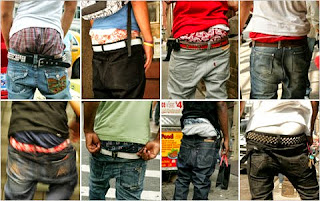
This mode of undress has been popular for years, and when it reached its all-time low — buckling one’s pants under the buttocks in the style of some hip-hop stars — I thought it was finally on its way out. But no. Teenagers and 30-year-old men alike continue to stand in front of me on the subway, giving me an eyeful of their tighty-whities, which in many cases have ceased being both tight and white.
And you think high heels are impractical? Try walking in some low-slung slacks. You must adopt a waddle to keep the pants from dropping completely and must always keep a hand free to hike them up. Then there is the need to buy ever-longer shirts to cover your rear end — shirts that apparently don’t exist, since I can see your underpants!
Nor are sagging pants the only sartorial choice that makes me cringe. Take rompers, or shortalls. They offer the ease of a dress with the comfort of shorts, and I’m for convenience. But when adults start wearing clothes that I’ve been buying for people’s babies, something is wrong. As for wearing a very adult thong with a short skirt: Do you really want to sit your bare derrière on a subway seat? Granny panties may not be that sexy, but neither is a visit to the urologist.
And what about those skinny jeans for men? Unless you’re built like the lead singer of the All-American Rejects, you’ll look like a Weeble wobbling in them. And if your legs are big enough to offset your broad upper body, you will instead resemble a stuffed sausage. Get yourself some relaxed fits — to be worn above the equator, of course. Unless you’re David Beckham, and your chiseled body has been groomed and styled into flawless Emporio Armani briefs, I don’t want to see your underwear. And neither does anyone else.
Tracey Lloyd, who grew up in Queens and now lives in Mount Vernon, N.Y., has worked as a marketing manager in the beauty industry.
September 26, 2009
Buddy can you spare a dime???
By Jennifer Millman
NBCNewYork.com
updated 2 minutes ago
His poll numbers are in the tank and even President Barack Obama doesn't want him to run next year, but David Paterson still loves being governor.
"It has been the most exciting time in my life," Paterson said yesterday, according to the Daily News. "It has been the most challenging time in my life … I'm gonna keep doing it until the public tells me it's time to stop."
Adam:
Yes, he is having a wonderful time on us. While New yorkers loose their jobs and struggle to live here, the governor is having "The time of his life."
We are also having the time of our life's. "Buddy can you spare a dime??????????
NBCNewYork.com
updated 2 minutes ago
His poll numbers are in the tank and even President Barack Obama doesn't want him to run next year, but David Paterson still loves being governor.
"It has been the most exciting time in my life," Paterson said yesterday, according to the Daily News. "It has been the most challenging time in my life … I'm gonna keep doing it until the public tells me it's time to stop."
Adam:
Yes, he is having a wonderful time on us. While New yorkers loose their jobs and struggle to live here, the governor is having "The time of his life."
We are also having the time of our life's. "Buddy can you spare a dime??????????
September 25, 2009
Coming out in middle school
Coming Out in Middle School
By BENOIT DENIZET-LEWIS
Published: September 23, 2009
Austin didn’t know what to wear to his first gay dance last spring. It was bad enough that the gangly 13-year-old from Sand Springs, Okla., had to go without his boyfriend at the time, a 14-year-old star athlete at another middle school, but there were also laundry issues. “I don’t have any clean clothes!” he complained to me by text message, his favored method of communication.
Brent Humphreys for The New York Times
Austin, a gay 13-year-old from Oklahoma.
Multimedia
The Takeaway With Benoit Denizet-Lewis
Brent Humphreys for The New York Times
Support: A gay 15-year-old from Michigan, also named Austin, with his mother, Nadia.
When I met up with him an hour later, he had weathered his wardrobe crisis (he was in jeans and a beige T-shirt with musical instruments on it) but was still a nervous wreck. “I’m kind of scared,” he confessed. “Who am I going to talk to? I wish my boyfriend could come.” But his boyfriend couldn’t find anyone to give him a ride nor, Austin explained, could his boyfriend ask his father for one. “His dad would give him up for adoption if he knew he was gay,” Austin told me. “I’m serious. He has the strictest, scariest dad ever. He has to date girls and act all tough so that people won’t suspect.”
Austin doesn’t have to play “the pretend game,” as he calls it, anymore. At his middle school, he has come out to his close friends, who have been supportive. A few of his female friends responded that they were bisexual. “Half the girls I know are bisexual,” he said. He hadn’t planned on coming out to his mom yet, but she found out a week before the dance. “I told my cousin, my cousin told this other girl, she told her mother, her mother told my mom and then my mom told me,” Austin explained. “The only person who really has a problem with it is my older sister, who keeps saying: ‘It’s just a phase! It’s just a phase!’ ”
Austin’s mom was on vacation in another state during my visit to Oklahoma, so a family friend drove him to the weekly youth dance at the Openarms Youth Project in Tulsa, which is housed in a white cement-block building next to a redbrick Baptist church on the east side of town. We arrived unfashionably on time, and Austin tried to park himself on a couch in a corner but was whisked away by Ben, a 16-year-old Openarms regular, who gave him an impromptu tour and introduced him to his mom, who works the concession area most weeks.
Openarms is practically overrun with supportive moms. While Austin and Ben were on the patio, a 14-year-old named Nick arrived with his mom. Nick came out to her when he was 12 but had yet to go on a date or even kiss a boy, which prompted his younger sister to opine that maybe he wasn’t actually gay. “She said, ‘Maybe you’re bisexual,’ ” Nick told me. “But I don’t have to have sex with a girl to know I’m not interested.”
Ninety minutes after we arrived, Openarms was packed with about 130 teenagers who had come from all corners of the state. Some danced to the Lady Gaga song “Poker Face,” others battled one another in pool or foosball and a handful of young couples held hands on the outdoor patio. In one corner, a short, perky eighth-grade girl kissed her ninth-grade girlfriend of one year. I asked them where they met. “In church,” they told me. Not far from them, a 14-year-old named Misti — who came out to classmates at her middle school when she was 12 and weathered anti-gay harassment and bullying, including having food thrown at her in the cafeteria — sat on a wooden bench and cuddled with a new girlfriend.
Austin had practically forgotten about his boyfriend. Instead, he was confessing to me — mostly by text message, though we were standing next to each other — his crush on Laddie, a 16-year-old who had just moved to Tulsa from a small town in Texas. Like Austin, Laddie was attending the dance for the first time, but he came off as much more comfortable in his skin and had a handful of admirers on the patio. Laddie told them that he came out in eighth grade and that the announcement sent shock waves through his Texas school.
“I definitely lost some friends,” he said, “but no one really made fun of me or called me names, probably because I was one of the most popular kids when I came out. I don’t think I would have come out if I wasn’t popular.”
“When I first realized I was gay,” Austin interjected, “I just assumed I would hide it and be miserable for the rest of my life. But then I said, ‘O.K., wait, I don’t want to hide this and be miserable my whole life.’ ”
I asked him how old he was when he made that decision.
“Eleven,” he said.
By BENOIT DENIZET-LEWIS
Published: September 23, 2009
Austin didn’t know what to wear to his first gay dance last spring. It was bad enough that the gangly 13-year-old from Sand Springs, Okla., had to go without his boyfriend at the time, a 14-year-old star athlete at another middle school, but there were also laundry issues. “I don’t have any clean clothes!” he complained to me by text message, his favored method of communication.
Brent Humphreys for The New York Times
Austin, a gay 13-year-old from Oklahoma.
Multimedia
The Takeaway With Benoit Denizet-Lewis
Brent Humphreys for The New York Times
Support: A gay 15-year-old from Michigan, also named Austin, with his mother, Nadia.
When I met up with him an hour later, he had weathered his wardrobe crisis (he was in jeans and a beige T-shirt with musical instruments on it) but was still a nervous wreck. “I’m kind of scared,” he confessed. “Who am I going to talk to? I wish my boyfriend could come.” But his boyfriend couldn’t find anyone to give him a ride nor, Austin explained, could his boyfriend ask his father for one. “His dad would give him up for adoption if he knew he was gay,” Austin told me. “I’m serious. He has the strictest, scariest dad ever. He has to date girls and act all tough so that people won’t suspect.”
Austin doesn’t have to play “the pretend game,” as he calls it, anymore. At his middle school, he has come out to his close friends, who have been supportive. A few of his female friends responded that they were bisexual. “Half the girls I know are bisexual,” he said. He hadn’t planned on coming out to his mom yet, but she found out a week before the dance. “I told my cousin, my cousin told this other girl, she told her mother, her mother told my mom and then my mom told me,” Austin explained. “The only person who really has a problem with it is my older sister, who keeps saying: ‘It’s just a phase! It’s just a phase!’ ”
Austin’s mom was on vacation in another state during my visit to Oklahoma, so a family friend drove him to the weekly youth dance at the Openarms Youth Project in Tulsa, which is housed in a white cement-block building next to a redbrick Baptist church on the east side of town. We arrived unfashionably on time, and Austin tried to park himself on a couch in a corner but was whisked away by Ben, a 16-year-old Openarms regular, who gave him an impromptu tour and introduced him to his mom, who works the concession area most weeks.
Openarms is practically overrun with supportive moms. While Austin and Ben were on the patio, a 14-year-old named Nick arrived with his mom. Nick came out to her when he was 12 but had yet to go on a date or even kiss a boy, which prompted his younger sister to opine that maybe he wasn’t actually gay. “She said, ‘Maybe you’re bisexual,’ ” Nick told me. “But I don’t have to have sex with a girl to know I’m not interested.”
Ninety minutes after we arrived, Openarms was packed with about 130 teenagers who had come from all corners of the state. Some danced to the Lady Gaga song “Poker Face,” others battled one another in pool or foosball and a handful of young couples held hands on the outdoor patio. In one corner, a short, perky eighth-grade girl kissed her ninth-grade girlfriend of one year. I asked them where they met. “In church,” they told me. Not far from them, a 14-year-old named Misti — who came out to classmates at her middle school when she was 12 and weathered anti-gay harassment and bullying, including having food thrown at her in the cafeteria — sat on a wooden bench and cuddled with a new girlfriend.
Austin had practically forgotten about his boyfriend. Instead, he was confessing to me — mostly by text message, though we were standing next to each other — his crush on Laddie, a 16-year-old who had just moved to Tulsa from a small town in Texas. Like Austin, Laddie was attending the dance for the first time, but he came off as much more comfortable in his skin and had a handful of admirers on the patio. Laddie told them that he came out in eighth grade and that the announcement sent shock waves through his Texas school.
“I definitely lost some friends,” he said, “but no one really made fun of me or called me names, probably because I was one of the most popular kids when I came out. I don’t think I would have come out if I wasn’t popular.”
“When I first realized I was gay,” Austin interjected, “I just assumed I would hide it and be miserable for the rest of my life. But then I said, ‘O.K., wait, I don’t want to hide this and be miserable my whole life.’ ”
I asked him how old he was when he made that decision.
“Eleven,” he said.
September 24, 2009
They know what you are doing on the net...Social Networking sites are leaking worse than a main water pipe in Manhattan
Study: Social networking sites leaking personal information to third parties
by Jaikumar Vijayan, Computerworld
Editor's Note: This story is excerpted from Computerworld. For more Mac coverage, visit Computerworld's Macintosh Knowledge Center.
Many major social networking sites are leaking information that allows third-party advertising and tracking companies to associate the Web browsing habits of users with a specific person, researchers warn.
The findings (PDF document), which appears to have received scant public attention so far, was presented by the study’s two researchers at a conference in Barcelona more than a month ago. Earlier this week, civil liberties group Electronic Frontier Foundation (EFF) referred to the study in a blog post.
The research, by Craig Wills of Worcester Polytechnic and Balachander Krishnamurthy of ATT, presents “some interesting technical details” on how social networking sites are leaking personal data, the EFF blog post said.
“In some cases, the leakage may be unintentional, but in others, there is clever and surreptitious anti-privacy engineering at work,” the EFF said.
Wills told Computerworld that he and Krishnamurthy surveyed 12 of the biggest social networks for the study. They discovered that 11 of them were leaking personal identity information to third-parties including data aggregators, which track and aggregate user viewing habits for targeted ad-serving purposes.
What the study shows is that most users on social networking sites are vulnerable to having their identity information from their profiles, associated with tracking cookies used by data aggregators, he said.
The information allows aggregators to relatively easily scoop up personal data from a user's social network page and to track that user’s movement's across multiple Web sites across the Internet.
While aggregators have typically claimed that a person’s movement on the Internet is tracked just as an anonymous IP address, the information from social networking sites allows them to attach a unique identity to each profile, Wills said.
What is not known, however, is if data aggregators are actually recording any of the personal identity information being relayed to them from social media sites, Wills said.
He said personal identity data or unique identifiers that point to a person’s real identity are often relayed by social networking sites to third parties via so-called HTPP referrer headers. HTTP headers basically identity to a Web page the URL of any resources that link to it.
In the case of the social networks surveyed, all of the URLs being relayed via such HTTP headers included the user’s unique identifier, he said.
When a user’s page is being loaded on such sites, third-party tracking and advertising services that have a relationship with the site get not only the data from their tracking cookies but also the data containing the users unique identifier from the HTTP header, he said.
Another way in which identity data is leaked to third-party providers is when a social networking site contains objects from a server that appears to be part of the site, but in reality belongs to the third-party.
At least two of the social networks surveyed were relaying personal identity data to such hidden third-party servers, the report said. Also, five of the 12 social networks surveyed were also leaking unique user identifiers via so-called Request-URIs, which identify pages or objects on a Web site.
“We don’t know what the specific practice of a third-party tracking site,” when it comes to using the information, Wills said. “But this information is available to them. It is particularly worrisome because third-party aggregators are creeping into a lot of sites that you and I visit.”
EFF staff technologist Peter Eckersley noted in the blog post that there appears to be no easy way for users of such sites to avoid being tracked in this fashion.
To mitigate the risk, users of social networking sites need to disable flash cookies and ensure that all other cookies are deleted when the browser is closed, Eckersley wrote.
Certain Firefox extensions are also available that allow users to control when third-party sites can include content or run code on their browsers and plug-ins are available to help them opt out of targeted advertising cookies, he wrote.
But the steps can be hard to follow and can limit browser functionality. “We’re fearful that the vast majority of Internet users will continue to be tracked by dozens of companies—companies they’ve never heard of, companies they have no relationship with, companies they would never choose to trust with their most private thoughts and reading habits,” he wrote.
by Jaikumar Vijayan, Computerworld
Editor's Note: This story is excerpted from Computerworld. For more Mac coverage, visit Computerworld's Macintosh Knowledge Center.
Many major social networking sites are leaking information that allows third-party advertising and tracking companies to associate the Web browsing habits of users with a specific person, researchers warn.
The findings (PDF document), which appears to have received scant public attention so far, was presented by the study’s two researchers at a conference in Barcelona more than a month ago. Earlier this week, civil liberties group Electronic Frontier Foundation (EFF) referred to the study in a blog post.
The research, by Craig Wills of Worcester Polytechnic and Balachander Krishnamurthy of ATT, presents “some interesting technical details” on how social networking sites are leaking personal data, the EFF blog post said.
“In some cases, the leakage may be unintentional, but in others, there is clever and surreptitious anti-privacy engineering at work,” the EFF said.
Wills told Computerworld that he and Krishnamurthy surveyed 12 of the biggest social networks for the study. They discovered that 11 of them were leaking personal identity information to third-parties including data aggregators, which track and aggregate user viewing habits for targeted ad-serving purposes.
What the study shows is that most users on social networking sites are vulnerable to having their identity information from their profiles, associated with tracking cookies used by data aggregators, he said.
The information allows aggregators to relatively easily scoop up personal data from a user's social network page and to track that user’s movement's across multiple Web sites across the Internet.
While aggregators have typically claimed that a person’s movement on the Internet is tracked just as an anonymous IP address, the information from social networking sites allows them to attach a unique identity to each profile, Wills said.
What is not known, however, is if data aggregators are actually recording any of the personal identity information being relayed to them from social media sites, Wills said.
He said personal identity data or unique identifiers that point to a person’s real identity are often relayed by social networking sites to third parties via so-called HTPP referrer headers. HTTP headers basically identity to a Web page the URL of any resources that link to it.
In the case of the social networks surveyed, all of the URLs being relayed via such HTTP headers included the user’s unique identifier, he said.
When a user’s page is being loaded on such sites, third-party tracking and advertising services that have a relationship with the site get not only the data from their tracking cookies but also the data containing the users unique identifier from the HTTP header, he said.
Another way in which identity data is leaked to third-party providers is when a social networking site contains objects from a server that appears to be part of the site, but in reality belongs to the third-party.
At least two of the social networks surveyed were relaying personal identity data to such hidden third-party servers, the report said. Also, five of the 12 social networks surveyed were also leaking unique user identifiers via so-called Request-URIs, which identify pages or objects on a Web site.
“We don’t know what the specific practice of a third-party tracking site,” when it comes to using the information, Wills said. “But this information is available to them. It is particularly worrisome because third-party aggregators are creeping into a lot of sites that you and I visit.”
EFF staff technologist Peter Eckersley noted in the blog post that there appears to be no easy way for users of such sites to avoid being tracked in this fashion.
To mitigate the risk, users of social networking sites need to disable flash cookies and ensure that all other cookies are deleted when the browser is closed, Eckersley wrote.
Certain Firefox extensions are also available that allow users to control when third-party sites can include content or run code on their browsers and plug-ins are available to help them opt out of targeted advertising cookies, he wrote.
But the steps can be hard to follow and can limit browser functionality. “We’re fearful that the vast majority of Internet users will continue to be tracked by dozens of companies—companies they’ve never heard of, companies they have no relationship with, companies they would never choose to trust with their most private thoughts and reading habits,” he wrote.
September 19, 2009
Facebook will shut down 'BEACON'
Facebook will shut down Beacon to settle lawsuit
By Juan Carlos Perez
September 19, 2009 12:57 AM ET
Comments(0) Recommended(3) Digg Twitter Share/Email
Top Stories
IDG News Service - Facebook has agreed to shut down its much maligned Beacon advertising system in order to settle a class-action lawsuit.
The lawsuit, filed in August of last year, alleged that Facebook and its Beacon affiliates like Blockbuster and Overstock.com violated a series of laws, including the Electronic Communications Privacy Act, the Video Privacy Protection Act, the California Consumer Legal Remedies Act and the California Computer Crime Law.
The proposed settlement, announced late on Friday, calls not only for Facebook to discontinue Beacon, but also back the creation of an independent foundation devoted to promoting online privacy, safety and security. The money for the foundation will come from a US$9.5 million settlement fund.
"We learned a great deal from the Beacon experience. For one, it was underscored how critical it is to provide extensive user control over how information is shared. We also learned how to effectively communicate changes that we make to the user experience," said Barry Schnitt, Facebook's Director of Policy Communications, in a statement.
Facebook is looking forward to the creation of the foundation, which the company expects will team up with existing safety and privacy organizations, Schnitt said.
The settlement agreement needs to be approved by the U.S. District Court for the Northern District of California, San Jose Division, where the lawsuit was filed.
Beacon, launched with much fanfare in November 2007, quickly became one of Facebook's biggest nightmares. Intended as a key piece of Facebook's "social ads" strategy, Beacon was designed to broadcast back to their friends the actions that Facebook members took on participating Web sites.
The idea was that these notifications would act as a new form of "social" advertising, because they amount to endorsements of products made by trusted friends.
Unfortunately, Facebook members found Beacon complicated to understand, as well as intrusive and stealthy. Many people were horrified to find out that their friends were being informed of actions, like purchases, they had undertaken in other Web sites.
Security experts and privacy advocates soon joined the chorus of critics. Although Facebook modified Beacon several times, it never took off and has been languishing in obscurity.
Despite the Beacon fiasco, Facebook executives regularly say the advertising business of the privately-held company is solid and growing. In addition to offering traditional online ads like banners and pay-per-click ads, Facebook has continued developing social ads and marketing vehicles, like its Facebook Pages, which organizations can use to promote their brands and products.
By Juan Carlos Perez
September 19, 2009 12:57 AM ET
Comments(0) Recommended(3) Digg Twitter Share/Email
Top Stories
IDG News Service - Facebook has agreed to shut down its much maligned Beacon advertising system in order to settle a class-action lawsuit.
The lawsuit, filed in August of last year, alleged that Facebook and its Beacon affiliates like Blockbuster and Overstock.com violated a series of laws, including the Electronic Communications Privacy Act, the Video Privacy Protection Act, the California Consumer Legal Remedies Act and the California Computer Crime Law.
The proposed settlement, announced late on Friday, calls not only for Facebook to discontinue Beacon, but also back the creation of an independent foundation devoted to promoting online privacy, safety and security. The money for the foundation will come from a US$9.5 million settlement fund.
"We learned a great deal from the Beacon experience. For one, it was underscored how critical it is to provide extensive user control over how information is shared. We also learned how to effectively communicate changes that we make to the user experience," said Barry Schnitt, Facebook's Director of Policy Communications, in a statement.
Facebook is looking forward to the creation of the foundation, which the company expects will team up with existing safety and privacy organizations, Schnitt said.
The settlement agreement needs to be approved by the U.S. District Court for the Northern District of California, San Jose Division, where the lawsuit was filed.
Beacon, launched with much fanfare in November 2007, quickly became one of Facebook's biggest nightmares. Intended as a key piece of Facebook's "social ads" strategy, Beacon was designed to broadcast back to their friends the actions that Facebook members took on participating Web sites.
The idea was that these notifications would act as a new form of "social" advertising, because they amount to endorsements of products made by trusted friends.
Unfortunately, Facebook members found Beacon complicated to understand, as well as intrusive and stealthy. Many people were horrified to find out that their friends were being informed of actions, like purchases, they had undertaken in other Web sites.
Security experts and privacy advocates soon joined the chorus of critics. Although Facebook modified Beacon several times, it never took off and has been languishing in obscurity.
Despite the Beacon fiasco, Facebook executives regularly say the advertising business of the privately-held company is solid and growing. In addition to offering traditional online ads like banners and pay-per-click ads, Facebook has continued developing social ads and marketing vehicles, like its Facebook Pages, which organizations can use to promote their brands and products.
September 18, 2009
"Im not gay, that I will stand next to people that are gay"Kany West
No word on when this interview between Devi Dev and Kany West was actually recorded, but hardknock.tv just posted it on Tuesday, and there are some gems:
"I don't like men. I'm not gay, and I'm so sure of that. I'm so sure that I'm not gay that I'll wear a pink watch. That I'll wear tight jeans. That I'll stand next to people who look gay. That I'll stand next to people who are gay. That I will go to dinner with a gay person. Just me - and that gay person."
In the words of the president of these United States of America: "What an asshole."
Adamfoxie
"I don't like men. I'm not gay, and I'm so sure of that. I'm so sure that I'm not gay that I'll wear a pink watch. That I'll wear tight jeans. That I'll stand next to people who look gay. That I'll stand next to people who are gay. That I will go to dinner with a gay person. Just me - and that gay person."
In the words of the president of these United States of America: "What an asshole."
Adamfoxie
September 16, 2009
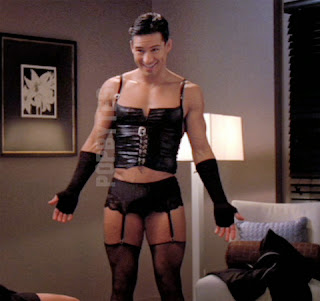
Mario Lopez: Am I wearing too much?
September 11, 2009
A dissapointing answer on DOMA from Cong. MacMahon
Dear Adam,
Thank you for contacting me to express your views about gay marriage.
I believe that same-sex couples deserve the same legal rights as heterosexual couples. Ultimately, however, gay marriage is an issue that will be resolved by the states and not the federal government.
Again, thank you for taking the time to contact me regarding this important issue. Please feel free to get in touch with my office in the future if I can be of any assistance to you on this or any other matter of concern. I hope you will find my website - www.mcmahon.house.gov - a useful resource for keeping up with events in Washington and the 13th District of New York.
Sincerely,
Michael E. McMahon
Representative for the 13th District of New York
Thank you for contacting me to express your views about gay marriage.
I believe that same-sex couples deserve the same legal rights as heterosexual couples. Ultimately, however, gay marriage is an issue that will be resolved by the states and not the federal government.
Again, thank you for taking the time to contact me regarding this important issue. Please feel free to get in touch with my office in the future if I can be of any assistance to you on this or any other matter of concern. I hope you will find my website - www.mcmahon.house.gov - a useful resource for keeping up with events in Washington and the 13th District of New York.
Sincerely,
Michael E. McMahon
Representative for the 13th District of New York
September 10, 2009
DO You Have a Phone???????????
CONSUMERS UNION
PUBLISHERS OF CONSUMER REPORTS
Dear Adam,
If you have a phone, it's time to use it. Last night, Congress heard from the President that the time for bickering, politics and lies about health care reform is over.
That the time for solving our health care crisis is now.
But we won’t achieve needed health care security because the President made a speech. We’ll cross the finish line because your own lawmakers hear from you. Use our toll-free number to tell your Senators that you expect them to improve the health care plan, not undermine it. Tell them they were elected to solve America’s problems, not sit in denial.
Call your Senators now and tell them to get back to work on health reform!
Opponents used the August recess to spread misinformation and scare us about health reform. But in town hall after town hall, lawmakers also heard from people bankrupted by cancer care and from hard-working Americans who can't retire because they don't yet qualify for Medicare -- and they can’t afford or get insurance on their own.
Health reform will finally hold insurance companies accountable, and make sure your health comes before corporate profits. No more coverage denials because of your health or your age; a limit on out-of-pocket costs; a focus on prevention and patient safety, not crowded ER care and piecemeal treatment.
Health reform will let you keep the insurance you have through your job, but it will make it more secure. It will give you the freedom to start a business or change jobs without fear of losing coverage. It will make Medicare more financially secure. And it will make sure every American has the right to the same kind of health care members of Congress give themselves.
Tell your Senators you want health reform that gives you the freedom to live your life.
The House is moving ahead on health reform, but the Senate has lagged behind. The Senate must get to work now or health reform cannot pass this year.
And after you've made your call, if you know others who also may want to call in support of reform, please forward this message. You are the engine that drives health reform forward. Thank you for all you do!
Sincerely,
Liz Foley
PrescriptionForChange.org
A project of Consumers Union
101 Truman Avenue
Yonkers, NY 10703
PUBLISHERS OF CONSUMER REPORTS
Dear Adam,
If you have a phone, it's time to use it. Last night, Congress heard from the President that the time for bickering, politics and lies about health care reform is over.
That the time for solving our health care crisis is now.
But we won’t achieve needed health care security because the President made a speech. We’ll cross the finish line because your own lawmakers hear from you. Use our toll-free number to tell your Senators that you expect them to improve the health care plan, not undermine it. Tell them they were elected to solve America’s problems, not sit in denial.
Call your Senators now and tell them to get back to work on health reform!
Opponents used the August recess to spread misinformation and scare us about health reform. But in town hall after town hall, lawmakers also heard from people bankrupted by cancer care and from hard-working Americans who can't retire because they don't yet qualify for Medicare -- and they can’t afford or get insurance on their own.
Health reform will finally hold insurance companies accountable, and make sure your health comes before corporate profits. No more coverage denials because of your health or your age; a limit on out-of-pocket costs; a focus on prevention and patient safety, not crowded ER care and piecemeal treatment.
Health reform will let you keep the insurance you have through your job, but it will make it more secure. It will give you the freedom to start a business or change jobs without fear of losing coverage. It will make Medicare more financially secure. And it will make sure every American has the right to the same kind of health care members of Congress give themselves.
Tell your Senators you want health reform that gives you the freedom to live your life.
The House is moving ahead on health reform, but the Senate has lagged behind. The Senate must get to work now or health reform cannot pass this year.
And after you've made your call, if you know others who also may want to call in support of reform, please forward this message. You are the engine that drives health reform forward. Thank you for all you do!
Sincerely,
Liz Foley
PrescriptionForChange.org
A project of Consumers Union
101 Truman Avenue
Yonkers, NY 10703
A swollen mouth because of a bad tooth can cause you, your life! If you are HIV..
Mouth Full of Problems: A Crisis in HIV Dental Care
by David Evans
Too few people with HIV get the routine oral health care they need to stay healthy. The teetering economy, experts say, might make the situation a whole lot worse.
Not accessing dental care can be deadly. In early 2007, a 12-year-old boy named Deamonte Driver from suburban Washington, DC, died of an infection that had spread from an abscess in his mouth to his brain. His family’s Medicaid had lapsed because of a technicality, so he didn’t get care until his mother took the by then very ill boy into an emergency room. Experts say an $80 tooth extraction, if done early enough, could have saved his life.
Though Driver’s HIV-status was never reported, and there hasn’t been wide press coverage of a similar story involving an openly HIV-positive person, David Reznick, DDS, head of the HIV Dental Alliance in Atlanta, says that all the necessary ingredients to create such a tragedy are already in place—and could be getting worse.
People with HIV are simultaneously more likely than their HIV-negative counterparts to have more frequent and more serious oral health issues, while being less likely to have the funds and insurance to cover necessary procedures. The public support that is available for providing clinical oral health care to people with HIV, Reznick says, is drying up as various states confront catastrophic budget crises. “We’re just not seeing enough [funding] increases to take care of the people we already serve,” Reznick laments, “So it’s an overwhelming need and no resources to pay for it.”
Open Wide
People rarely think—at least until their face is horribly swollen and they’re immobilized with pain—that oral health care can have much of an impact on their overall well-being. According to Reznick, however, a neglected mouth can lead to more than localized tooth pain: Tooth and gum infections can spread to other parts of the body, and mouth pain can cause people to go without necessary nutrition—and even cause them to forgo their HIV medications.
“If you’re in an extraordinary amount of pain, you’re not going to be able to take your medications,” he explains. “If you don’t have any teeth to chew with, how are you going to get the nutrition you need to stay healthy?”
Reznick also has concerns about chronic inflammation from untreated periodontal disease. A growing number of studies are illuminating the role of inflammation in a variety of non-AIDS-related health problems such as cardiovascular disease. The link between gum and heart disease has been proposed in HIV-negative people, and some evidence suggests it to be true.
For all of these reasons, preventive dental care can have a tremendous influence on a person’s overall well-being.
Unfortunately, many people with HIV don’t know or understand the importance of regular preventive dental care. According to the Health Resources and Services Administration (HRSA), people with HIV who are uninsured are three times as likely to have untreated dental needs as people with HIV who have insurance. HRSA also states, “Moreover, oral infections, mouth ulcers and other severe dental conditions associated with HIV infections go untreated more than twice as often as other health problems related to the disease.”
Roadblocks to Care
Reznick says that HIV stigma and cultural habits against seeking dental care are two big reasons that people fail to go to the dentist regularly even when they have coverage or access to a dentist through public or private benefits. But even among people who want to go to a dentist as often as is recommended—at least once every six months for a thorough cleaning and checkup—lack of insurance or comprehensive public benefits can mean going without. Given the severe budget woes of most states right now, publicly funded dental care is not expanding sufficiently to meet the growing epidemic. In fact, in many areas it is shrinking.
In most cities and towns, the only options for people without dental insurance are oral care programs covered by the Ryan White CARE Act or Medicaid. Ryan White, however, has been essentially flat-funded for several years, and Medicaid dental coverage, already stingy in many states, is beginning to disappear. “Without the Ryan White dollars, there’s minimal access,” Reznick says. “With states that had adult benefits through Medicaid who have lost them, it’s caused a gigantic crunch.”
“We’re struggling to keep up with the need,” Reznick explains, “because people are living longer, and more people are getting tested and entering into the system of care. So we’re literally booked through until November, and I have eight dental chairs and over three full-time dentists and three hygienists, and we’re having a very difficult time meeting the need.”
Reznick hopes that policymakers and people living with HIV understand the consequences of too-little access to good oral health care. Aside from the pain and illness it will almost certainly cause, Reznick contends, it will also end up costing more money in the long run. He is hoping for increases, rather than additional cuts, to services. When people don’t get preventive care, Reznick says, “they end up in the emergency department, and that’s going to cost the public a whole lot more than if they would have kept the benefits in place.”
by David Evans
Too few people with HIV get the routine oral health care they need to stay healthy. The teetering economy, experts say, might make the situation a whole lot worse.
Not accessing dental care can be deadly. In early 2007, a 12-year-old boy named Deamonte Driver from suburban Washington, DC, died of an infection that had spread from an abscess in his mouth to his brain. His family’s Medicaid had lapsed because of a technicality, so he didn’t get care until his mother took the by then very ill boy into an emergency room. Experts say an $80 tooth extraction, if done early enough, could have saved his life.
Though Driver’s HIV-status was never reported, and there hasn’t been wide press coverage of a similar story involving an openly HIV-positive person, David Reznick, DDS, head of the HIV Dental Alliance in Atlanta, says that all the necessary ingredients to create such a tragedy are already in place—and could be getting worse.
People with HIV are simultaneously more likely than their HIV-negative counterparts to have more frequent and more serious oral health issues, while being less likely to have the funds and insurance to cover necessary procedures. The public support that is available for providing clinical oral health care to people with HIV, Reznick says, is drying up as various states confront catastrophic budget crises. “We’re just not seeing enough [funding] increases to take care of the people we already serve,” Reznick laments, “So it’s an overwhelming need and no resources to pay for it.”
Open Wide
People rarely think—at least until their face is horribly swollen and they’re immobilized with pain—that oral health care can have much of an impact on their overall well-being. According to Reznick, however, a neglected mouth can lead to more than localized tooth pain: Tooth and gum infections can spread to other parts of the body, and mouth pain can cause people to go without necessary nutrition—and even cause them to forgo their HIV medications.
“If you’re in an extraordinary amount of pain, you’re not going to be able to take your medications,” he explains. “If you don’t have any teeth to chew with, how are you going to get the nutrition you need to stay healthy?”
Reznick also has concerns about chronic inflammation from untreated periodontal disease. A growing number of studies are illuminating the role of inflammation in a variety of non-AIDS-related health problems such as cardiovascular disease. The link between gum and heart disease has been proposed in HIV-negative people, and some evidence suggests it to be true.
For all of these reasons, preventive dental care can have a tremendous influence on a person’s overall well-being.
Unfortunately, many people with HIV don’t know or understand the importance of regular preventive dental care. According to the Health Resources and Services Administration (HRSA), people with HIV who are uninsured are three times as likely to have untreated dental needs as people with HIV who have insurance. HRSA also states, “Moreover, oral infections, mouth ulcers and other severe dental conditions associated with HIV infections go untreated more than twice as often as other health problems related to the disease.”
Roadblocks to Care
Reznick says that HIV stigma and cultural habits against seeking dental care are two big reasons that people fail to go to the dentist regularly even when they have coverage or access to a dentist through public or private benefits. But even among people who want to go to a dentist as often as is recommended—at least once every six months for a thorough cleaning and checkup—lack of insurance or comprehensive public benefits can mean going without. Given the severe budget woes of most states right now, publicly funded dental care is not expanding sufficiently to meet the growing epidemic. In fact, in many areas it is shrinking.
In most cities and towns, the only options for people without dental insurance are oral care programs covered by the Ryan White CARE Act or Medicaid. Ryan White, however, has been essentially flat-funded for several years, and Medicaid dental coverage, already stingy in many states, is beginning to disappear. “Without the Ryan White dollars, there’s minimal access,” Reznick says. “With states that had adult benefits through Medicaid who have lost them, it’s caused a gigantic crunch.”
“We’re struggling to keep up with the need,” Reznick explains, “because people are living longer, and more people are getting tested and entering into the system of care. So we’re literally booked through until November, and I have eight dental chairs and over three full-time dentists and three hygienists, and we’re having a very difficult time meeting the need.”
Reznick hopes that policymakers and people living with HIV understand the consequences of too-little access to good oral health care. Aside from the pain and illness it will almost certainly cause, Reznick contends, it will also end up costing more money in the long run. He is hoping for increases, rather than additional cuts, to services. When people don’t get preventive care, Reznick says, “they end up in the emergency department, and that’s going to cost the public a whole lot more than if they would have kept the benefits in place.”
September 5, 2009
Governor to be ousted and Liet. Gov to take his place is outed
OUTRAGE ACTIVIST: ANTI-GAY SC LT. GOVERNOR ANDRE BAUER IS GAY
Activist Mike Rogers, who was featured in Kirby Dick's movie Outrage and is known for exposing hypocritical closeted politicians, told Michelangelo Signorile today on Signorile's Sirius OutQ radio show that South Carolina Lieutenant Governor Andre Bauer is a closeted gay man.
Writes Rogers on his blog:
"I have confirmed and spoken to four individuals who I have no doubt are telling me the truth. These men have been hit on by Bauer, with one of them telling me it happened at least five times since Bauer's election in 2003. To a varying degree I have met with and believe the sources. And, as you'll recall, I have that 100% record. This was still not enough for me to report on him. Then another call came in and I met with the source while he was visiting DC recently. 'He's gay,' the source told me. 'How do you know?' I asked. 'Because I've had sex with him on two separate occasions.' That too, was not enough for me to report on without confirmation from others. I was led on a path to chatting with acquaintances of the source and two former employees of Bauer who served on his staff between 2004 and 2007. They reported to me that on on a total of three occasions Bauer spent hours alone with men hotel rooms. Each of them explained that the visits were with younger men who were not on the staff of the Lt. Governor nor had any official reason to be with him. The two men each confirmed that they had not known each other who saw this and each described similar circumstances under with these interactions occurred. One of them confirmed that he was told by the Lt. governor's visitor had a sexual encounter with Bauer. The combination of the reports and the first hand experiences were what I need to maintain my 100% record of being right in my reporting on this site."
Adds Rogers: "The bachelor is a right wing Christian conservative. He's done everything from defend the state issuing "I believe" license plates (complete with a cross on them) to defending the right of schools to use corporal punishment. In the presidential election he supported Mike Huckabee."
Should Governor Mark Sanford, who is under fire for an extramarital affair, leave office, Bauer is set to take his place as governor. Sanford continues to be under pressure from lawmakers and colleagues to resign.
(Towleroad)
Activist Mike Rogers, who was featured in Kirby Dick's movie Outrage and is known for exposing hypocritical closeted politicians, told Michelangelo Signorile today on Signorile's Sirius OutQ radio show that South Carolina Lieutenant Governor Andre Bauer is a closeted gay man.
Writes Rogers on his blog:
"I have confirmed and spoken to four individuals who I have no doubt are telling me the truth. These men have been hit on by Bauer, with one of them telling me it happened at least five times since Bauer's election in 2003. To a varying degree I have met with and believe the sources. And, as you'll recall, I have that 100% record. This was still not enough for me to report on him. Then another call came in and I met with the source while he was visiting DC recently. 'He's gay,' the source told me. 'How do you know?' I asked. 'Because I've had sex with him on two separate occasions.' That too, was not enough for me to report on without confirmation from others. I was led on a path to chatting with acquaintances of the source and two former employees of Bauer who served on his staff between 2004 and 2007. They reported to me that on on a total of three occasions Bauer spent hours alone with men hotel rooms. Each of them explained that the visits were with younger men who were not on the staff of the Lt. Governor nor had any official reason to be with him. The two men each confirmed that they had not known each other who saw this and each described similar circumstances under with these interactions occurred. One of them confirmed that he was told by the Lt. governor's visitor had a sexual encounter with Bauer. The combination of the reports and the first hand experiences were what I need to maintain my 100% record of being right in my reporting on this site."
Adds Rogers: "The bachelor is a right wing Christian conservative. He's done everything from defend the state issuing "I believe" license plates (complete with a cross on them) to defending the right of schools to use corporal punishment. In the presidential election he supported Mike Huckabee."
Should Governor Mark Sanford, who is under fire for an extramarital affair, leave office, Bauer is set to take his place as governor. Sanford continues to be under pressure from lawmakers and colleagues to resign.
(Towleroad)
Subscribe to:
Posts (Atom)
Popular Posts
-
I just learned that Steve Jobs funeral will be on friday. No details are given by the family. "The funeral will be a very private ce...
-
Bobby Jindal is warning that the Republicans must stop being the "stupid party" . The Louisiana governor, a likely contend...
-
If You are looking for a powerful way to shake off the February blahs, Aaron Star, the founder of Hot Nude Yoga, has a suggestion: get h...
-
May 10, 2013 It was never my intention to close the blog. adamfoxie*blog International will never close and the name is r...
-
http://gawker.com Listen up! An exciting employment opportunity for members of the flack community has just landed in the Gawker tip box: ...
-
There Was a Marched Yesterday to Protest The String of Gay Bashings then Dan Contarino was jumped on East 4th Street and Avenue D last...
-
Gay British boy bander Duncan James can sing. After checking out his muscled and tatted body in a sexy new photo shoot, we don't r...
-
Some people called him {Jeremy} But they were together for six year. But it’s always a shame when a couple split up; When you see age dif...
-
Abercrombie & Fitch CEO Michael Jeffries has high standards and he expects the hired help to meet these standards - especially at 40,...
-
'Kiev in the late 19th century. They are still stuck there. adamfoxie*— Tracy McVeigh writes on The Observer an update o...
Blog Archive
-
▼
2009
(148)
-
▼
October
(28)
- A Hate crimes calls meF*** Fagget come out and see...
- How do you feel if you were follow to see if you p...
- Could this be what Gates said about a more humane ...
- Men that voted for McCain were not able to get it ...
- Clossetted Gay Gov. Charlie Christ sells his soul ...
- Ewan McGregor with his tongue inside a man's mouth...
- Mob hit man out of the closet: Robert Mormando is ...
- What's the Proper Punishment for the Parents of 'B...
- Judge refuses to dismiss gay marriage ban suit He ...
- Twitter: Don't change your log-in data until furth...
- Why does Face Book needs to know??
- IRISH HURLER DONAL OG CUSACK: 'I'M GAY'
- Two Democratic Senators Refuse to Support DOMA rep...
- A Dick is not enough to get you Laid By A Gay Man
- Balloon boys rap anti gay slurs
- For the first time some one has written my feeling...
- iDoesn't
- HEY KID YOU'D BETTER MAKE THAT PLEDGE!!!Why not? b...
- If God wanted me to accepting of gays...
- Absolutely Disgraceful
- Put your hand on the hand of................
- The time is right for gay rights, if not, wait 10 ...
- Chow down and loose weight...the natural way!!!!
- FACEBOOK scam GROWING
- The RITZ cracker???
- OUTRAGE and Gov.Charlie Crist( FL) is not going to...
- MAD MEN star to get married
- PENTAGON'S Criticism of "Don't Ask."
-
▼
October
(28)